
Practical Insights on Accessible Learning and K-12 Professional Development
This blog is for K-12 leaders and instructional designers who want training that actually works, digital content that everyone can access, and practical guidance they can use. No jargon. No unnecessary complexity. Just clear thinking on the work that matters.

Accessible eLearning Tools for K–12 Districts: What to Ask Before You Buy
Image Description: Two professionals have a focused conversation, one holding a laptop with documents visible, in a professional office setting.
Photo by Christina @ wocintechchat.com M on Unsplash

Loom, Camtasia, and When Video Is Enough for K–12 Staff Training
Image Description: Three people gather around a laptop screen in a professional setting, one leaning in thoughtfully while the others look on with interest.
Photo by Christina @ wocintechchat.com M on Unsplash
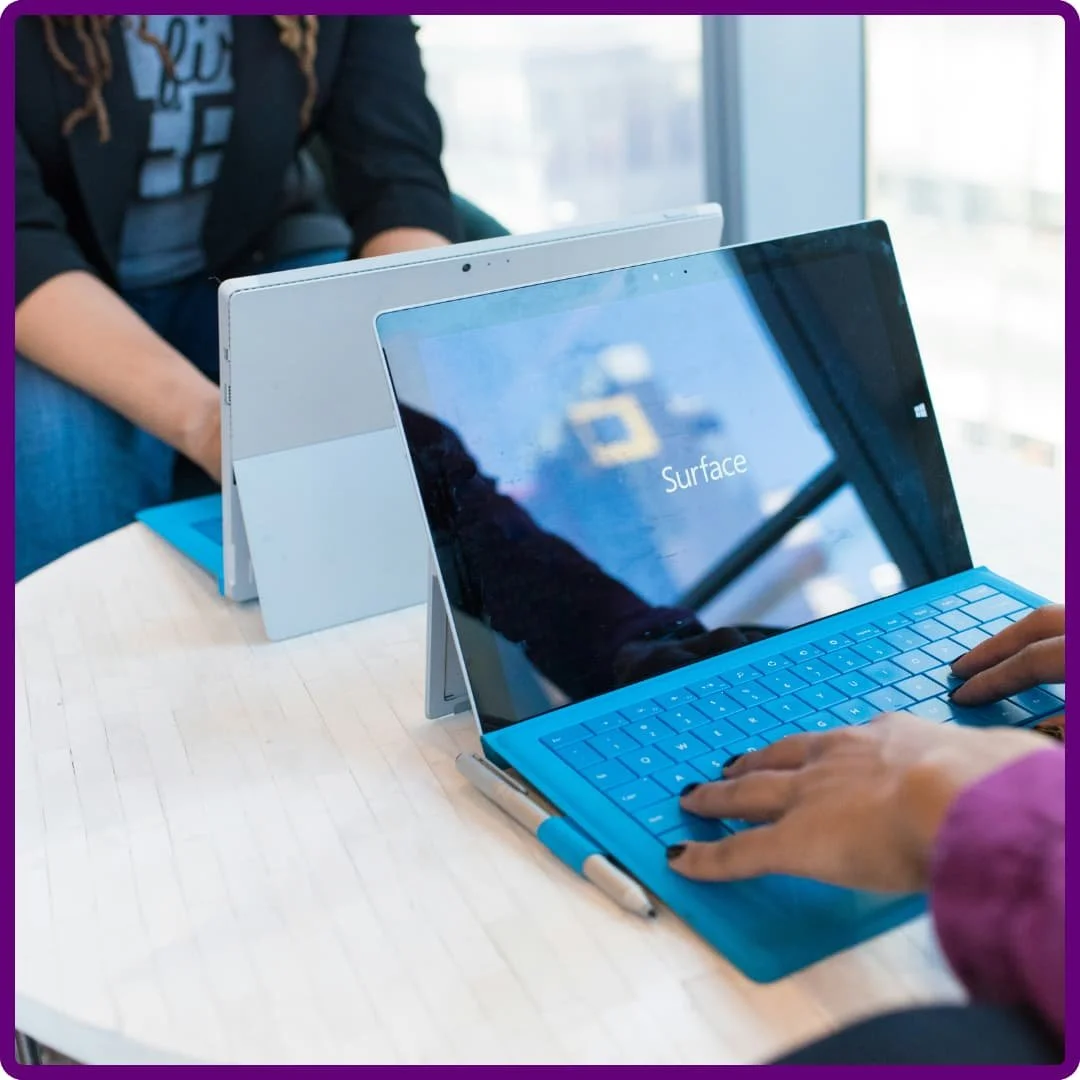
Does Your K–12 District Need an LMS? A Plain-Language Guide
Image Description: A person types on a Microsoft Surface tablet with a bright blue keyboard at a table, with a second Surface device visible in the background.
Photo by Christina @ wocintechchat.com M on Unsplash

Articulate, Rise, and Canva: Which eLearning Authoring Tool Is Right for Your K–12 District?
Image Description: Two people stand side by side reviewing content across multiple computer screens in a bright workspace.
Photo by Christina @ wocintechchat.com M on Unsplash

K–12 eLearning: How to Choose the Right Format Before You Choose a Tool
Image Description: Three women collaborate around a laptop in a planning session, with a whiteboard covered in sticky notes visible in the background.

The Hidden Cost of Poor Training Design in K–12 Districts (And the ROI of Getting It Right)
Image Description: Three women collaborate around a tablet at a work table, one pointing at the screen while the others lean in to review the content together.

Why K–12 Staff Training So Often Feels Overwhelming (And What to Do About It)
Image Description: A teacher sits at a classroom desk with her face in her hands, surrounded by classroom supplies, conveying stress and overwhelm.

What Is UDL — And What Does It Have to Do With K–12 Staff Training?
Image Description: Two educators wearing lanyards talk together during a professional development session, one seated with an open binder and the other standing and leaning in to discuss it.

Why Your K–12 Staff Training Isn't Changing Practice (And How Backward Design Fixes That)
Image Description: A professional wearing a lanyard gestures expressively while explaining something to a colleague in a school or workplace setting.

A WCAG Self-Assessment Checklist for K–12 Districts: Where to Start
Image Description: A woman smiles while holding a phone near her mouth and looking at a laptop, working from a bright home workspace.

What WCAG Compliance Actually Requires of K–12 Districts
Image Description: A professional woman wearing a hijab sits at a desk with a laptop, and signs help.

The Four Principles of WCAG: What POUR Means in Plain Language
Image Description: A young woman with Down syndrome sits on a couch engaged with a tablet, her hand raised as she interacts with the screen.

WCAG 2.1 vs. WCAG 2.2: What Changed and What Your District Needs to Know
Image Description: A woman wearing dark glasses sits at a desk with a laptop and open books, with a white cane visible in the background.

WCAG Levels Explained: What Level AA Actually Means for Your District
Image Description: A Deaf Black man wearing glasses and a KN-95 mask leans back in a chair while signing in a video meeting via laptop. A community library filled with books and social justice posters serves as the backdrop.
Image by Disabled And Here from the Disabled And Here project page.

What Is WCAG? A Plain-Language Introduction for K–12 Leaders
Image Description: A woman using a power wheelchair smiles while working on a laptop, with the wheelchair's joystick visible in the foreground.

Special Education Staff Training: Where Instructional Design and IDEA Meet
Image Description: Two professionals wearing lanyards review a document together during a training session, with other attendees visible in the background.

Staff Retention Starts With Onboarding: What K–12 Districts Can Do Differently
Image Description: A senior professional woman in a black blazer stands with arms crossed in a confident pose in a bright office setting.

What Does It Actually Cost to Build eLearning for a K–12 District?
Image Description: A person reviews a detailed spreadsheet with numerical data on a laptop screen, with one hand on the keyboard and the other pointing at the screen.

The Hidden Compliance Risk in Your K–12 District's Digital Content
Image Description: A professional woman wearing glasses reviews documents alongside a calculator at a bright office desk.
ADA Title II complaints can be filed against your district today — before any deadline passes. Here's what's actually at stake and how to get ahead of it.

PDF Accessibility for K–12 Districts: The Most Common Mistakes and How to Fix Them
Image Description: Two people work side by side on laptops at a table, one screen showing a data report with charts, the other displaying a spreadsheet, with a notepad and coffee nearby.
The most common PDF accessibility mistakes in K–12 districts, with plain-language fixes and guidance on where to prioritize your remediation effort.
If what you're reading here resonates
The next step is a conversation. Book a free 30-minute intro call to talk through what you're working on.
Not ready to talk yet?
Explore free accessibility and learning resources you can use today.